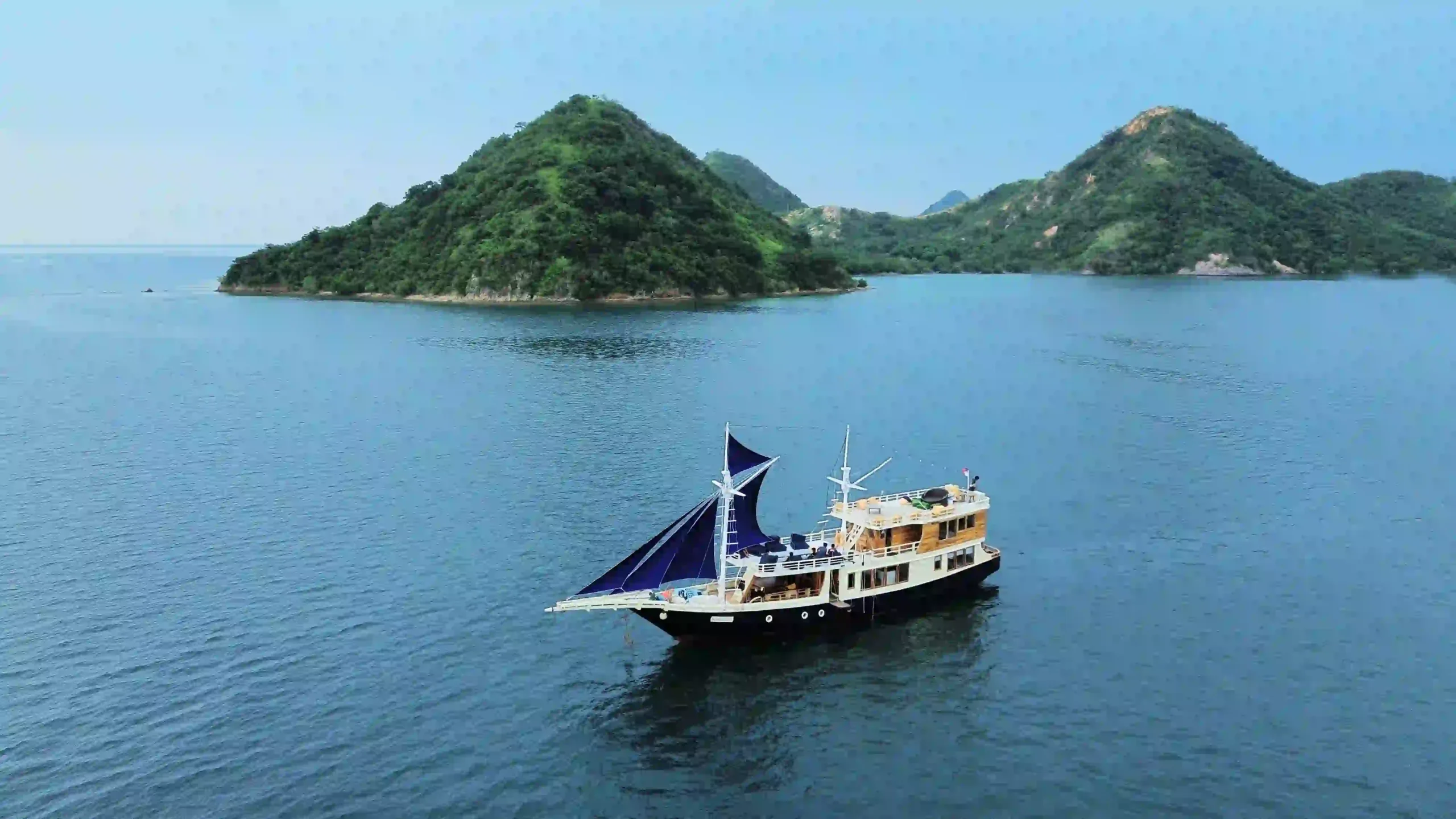
Bulukumba, ulin timber, and a UNESCO-listed craft passed down inside a handful of families.
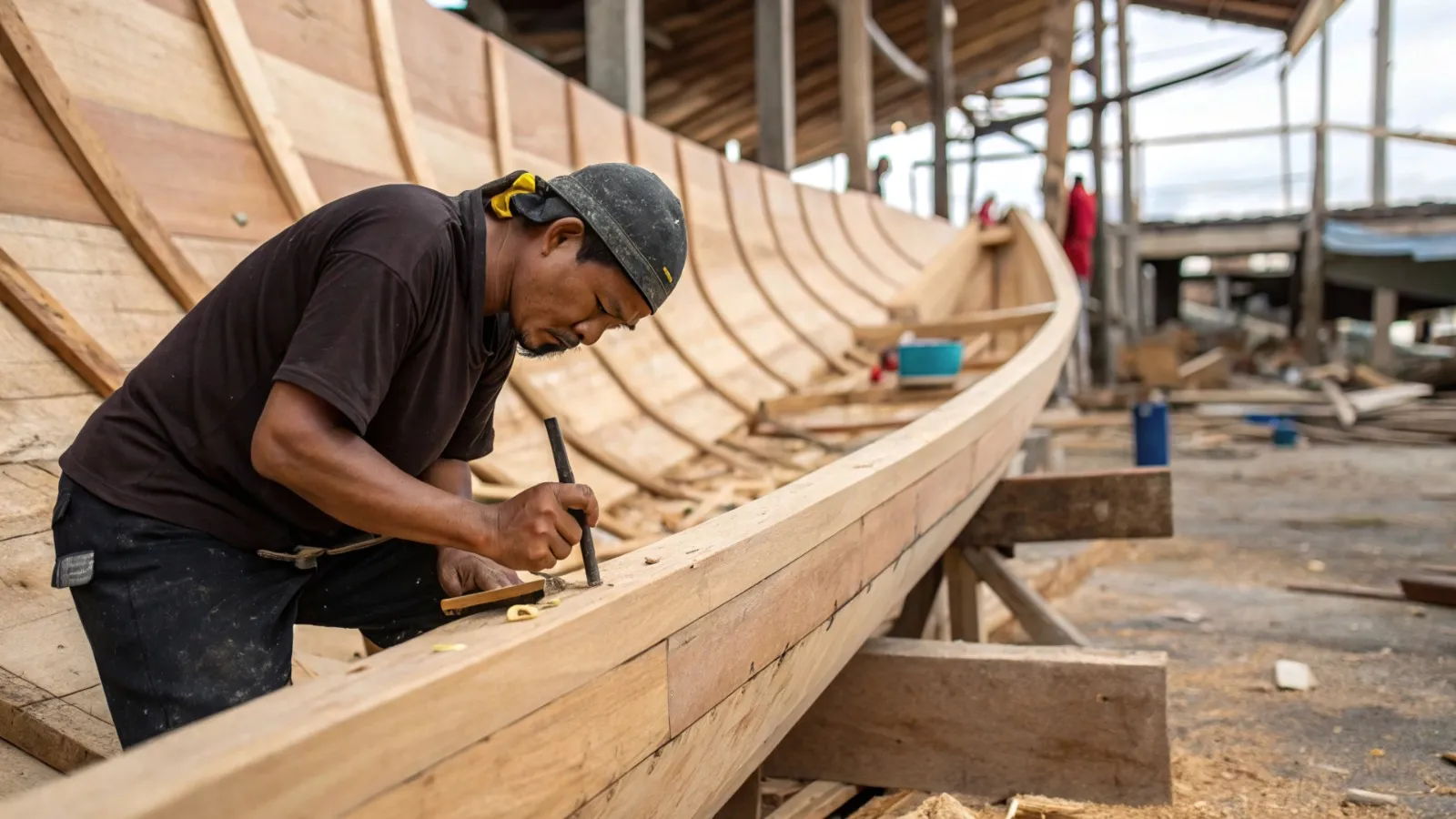
Phinisi are built on open beaches in Bulukumba, South Sulawesi — chiefly Tana Beru, Bira and Ara — by shipwrights known as panrita lopi. UNESCO inscribed the craft in 2017 as "Pinisi, art of boatbuilding in South Sulawesi" (file 01197). Hulls are planked hardwood joined with wooden dowels, not steel nails, and sealed with natural fibre caulking. There's no covered shed, no CNC-cut frame kit, no drawing pinned to a wall — the hull takes shape in the open air, shaped by eye and a body of knowledge passed down inside a handful of families.
| Place | Role | Known For |
|---|---|---|
| Tana Beru, Bulukumba | Principal building yards | Highest concentration of open-beach yards; large charter and cargo hulls built and repaired here |
| Bira, Bulukumba | Building & seafaring centre | Boatbuilding alongside a long seafaring tradition; several Labuan Bajo charter phinisi were built here |
| Ara, Bulukumba | Source village for shipwrights | Named by UNESCO alongside Tana Beru as home of the panrita lopi who staff the yards |
| Labuan Bajo, Flores | Refit & repair | Not a building centre — a working base for slipping, refit and conversion of hulls already in charter |
Logs are sourced and brought to the beach yard. The master shipwright chooses which log becomes the keel — ulin, bitti or teak.
A ritual is performed by the shipwright and owner before the keel — the spine of the hull — is laid, on a day chosen by the master builder.
Sawn hardwood frames are set on the keel to define the hull shape, worked by eye rather than from a lofted drawing.
The longest phase: bitti and teak planks are fitted and fastened with wooden treenails — the traditional method avoids steel nails entirely.
Seams are packed with natural fibre, then sealed. This step is repeated at every later refit, not just at the build.
Deck beams, teak decking, cabins and masts go on, running into the interior fit-out.
Masts and spars are stepped, the hull is painted, launch rituals are held, and the boat is walked into the sea.
Because the hull is shaped by eye, sister ships from the same yard differ. Photographs of "a similar boat" aren't evidence about the boat you're booking.
Caulking, antifouling and plank work are recurring jobs. A boat that's skipped its slipping season shows it in the bilge first — see our refit cycle guide.
A well-maintained twelve-year-old hull with a documented refit history beats a two-year-old hull that's never been slipped.
In 2017, at the twelfth session of the Intergovernmental Committee — titled "Pinisi, art of boatbuilding in South Sulawesi", file number 01197, on the Representative List of the Intangible Cultural Heritage of Humanity.
Ironwood (ulin) for the keel and heavy structure, bitti and teak for planking, teak for decks and joinery. Yards vary, and other local hardwoods are also used depending on supply.
The traditional method fastens planking with wooden treenails rather than steel nails. Modern charter builds may add metal fastenings, but dowel-fastened planking remains the defining technique.
There's no published figure. Yard estimates of one to two years for a large charter hull circulate but aren't formally sourced.
Traditionally, no — the master shipwright shapes the hull by eye and inherited proportion, which is why two boats of the same nominal length can differ noticeably below deck.
Maintenance history matters more than age. A hull slipped on schedule with documented caulking and antifouling work is safer than a newer boat with no refit record.
Say so when you enquire — some hulls in the fleet come with documented yard and refit histories, and we can point you at those first.
Chat on WhatsApp