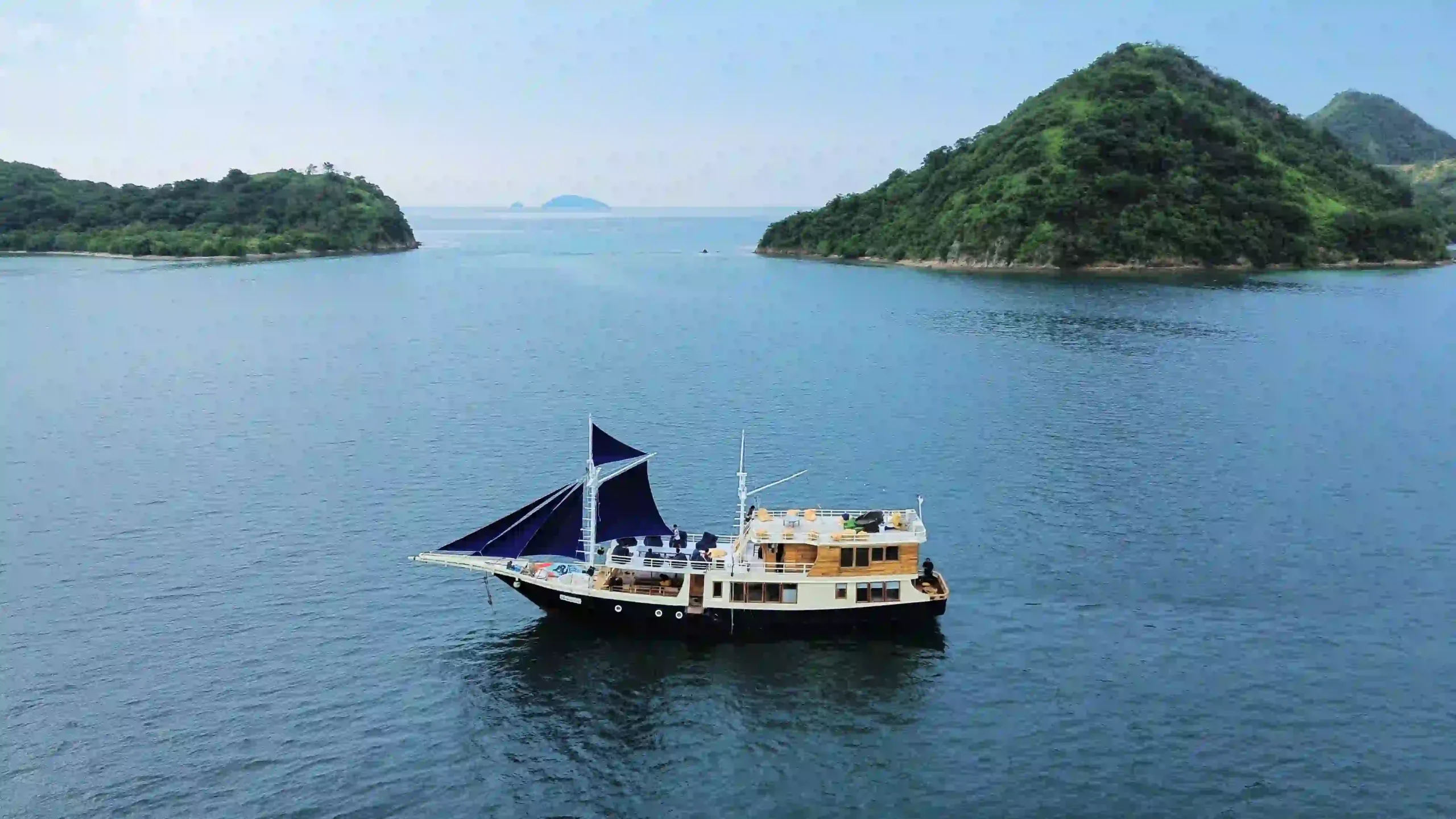
Speed, stability and cost — the honest trade-offs between a wooden phinisi and a motor yacht, with real published rates on both sides.
Short answer. A wooden phinisi rolls slower, runs quieter at anchor and costs less per night than a comparable steel or composite motor yacht: published phinisi charters start at USD 1,800 per night and top out around USD 18,700, while expedition-grade motor vessels in the same fleet are USD 26,000 to USD 27,000 per night plus VAT. Motor yachts win on speed and range.
| Aspect | Wooden Phinisi | Motor / Steel Yacht |
|---|---|---|
| Hull | Hand-planked hardwood on an ironwood keel, built in South Sulawesi | Welded steel, aluminium or moulded composite from a commercial yard |
| Motion at sea | Heavier displacement, slower and deeper roll — many guests find it easier on the stomach | Lighter, quicker motion; stabilisers where fitted make a large difference |
| Noise at anchor | Generator is the main sound; timber absorbs rather than transmits | More machinery noise carried through a metal structure unless well insulated |
| Speed & range | Modest cruising speed; long legs are run overnight while guests sleep | Faster passage speed and longer range — why expedition vessels run remote southern routes |
| Sailing | Two masts, sails set on open crossings when wind and schedule allow | None; propulsion is engine only |
| Draft & anchorages | Shallow draft suits the bays at Kelor, Manjarite, Siaba and Kanawa | Deeper draft on larger vessels limits some inshore anchorages |
| Maintenance | Slipping, caulking and antifouling on a recurring cycle | Steel needs blasting and coating; composite needs the least routine hull work |
| Published rate, whole boat | USD 1,800–18,700 per night (some plus 11–12% VAT) | USD 26,000–27,000 per night plus 11–12% VAT at expedition grade |

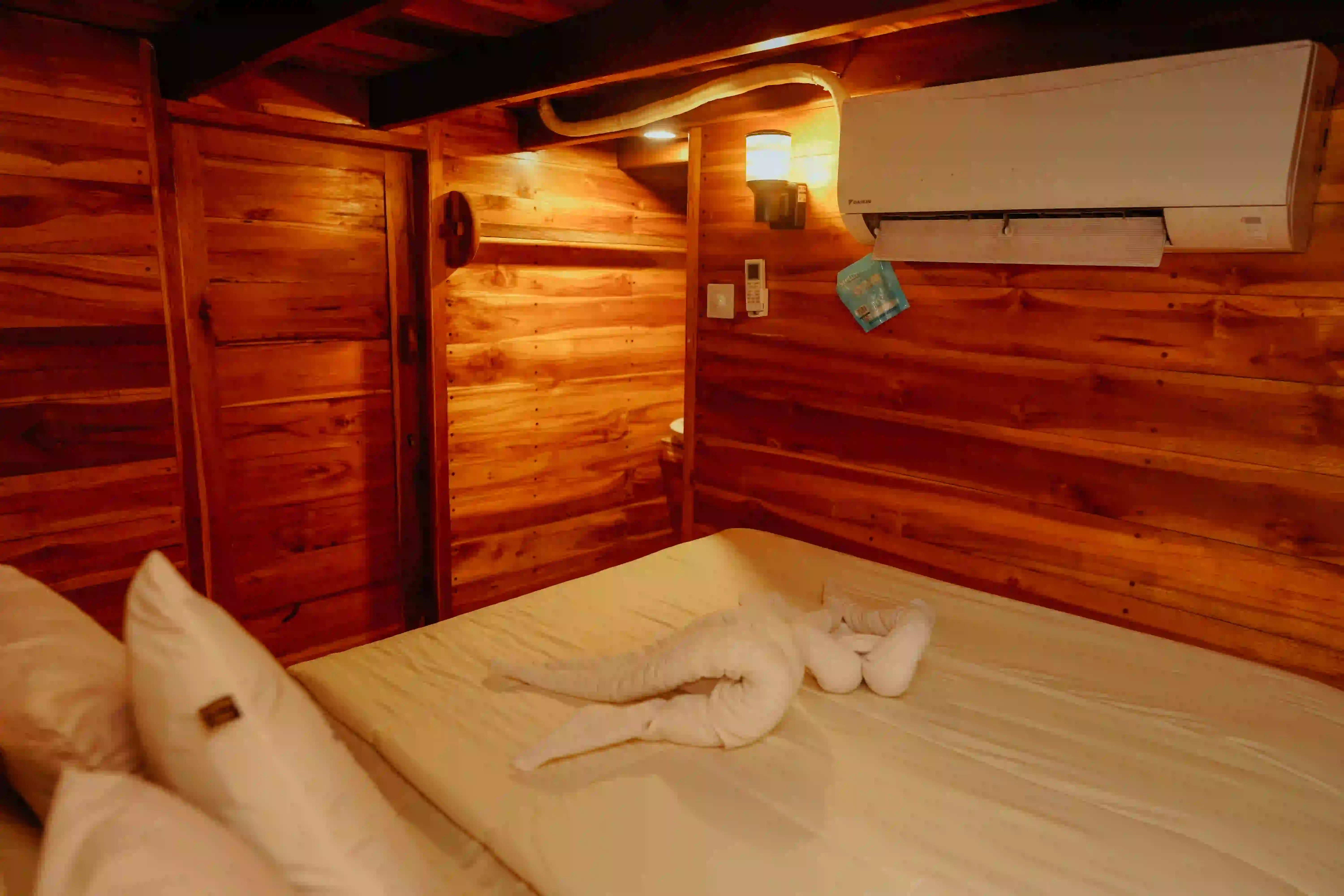
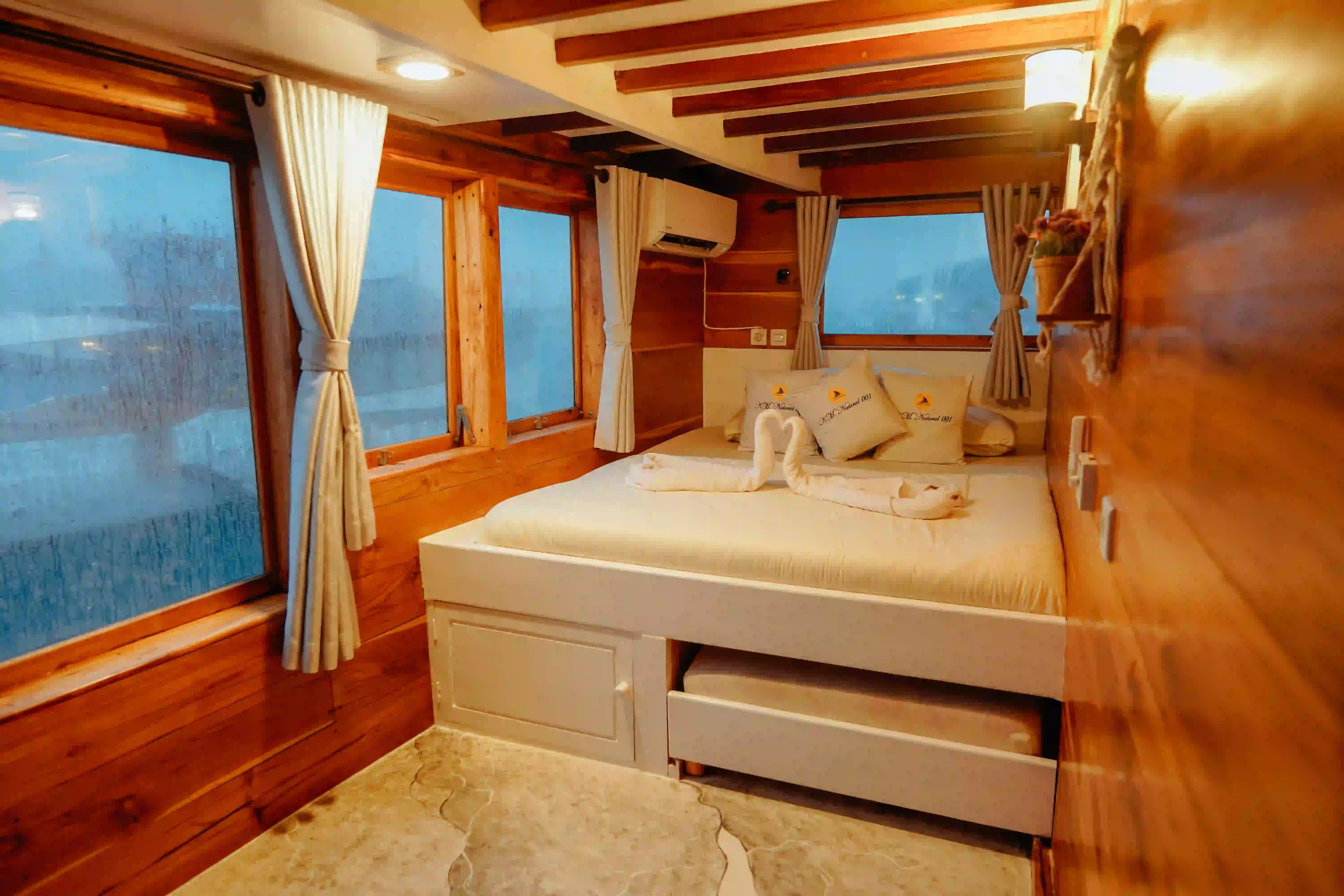
A wooden phinisi such as Manta Mae or Samara 1 runs roughly USD 350–385 per guest per night at capacity — the strongest per-head economics in the fleet.
A VVIP motor yacht such as The Maj Oceanic spends its premium on private space rather than cabin count.
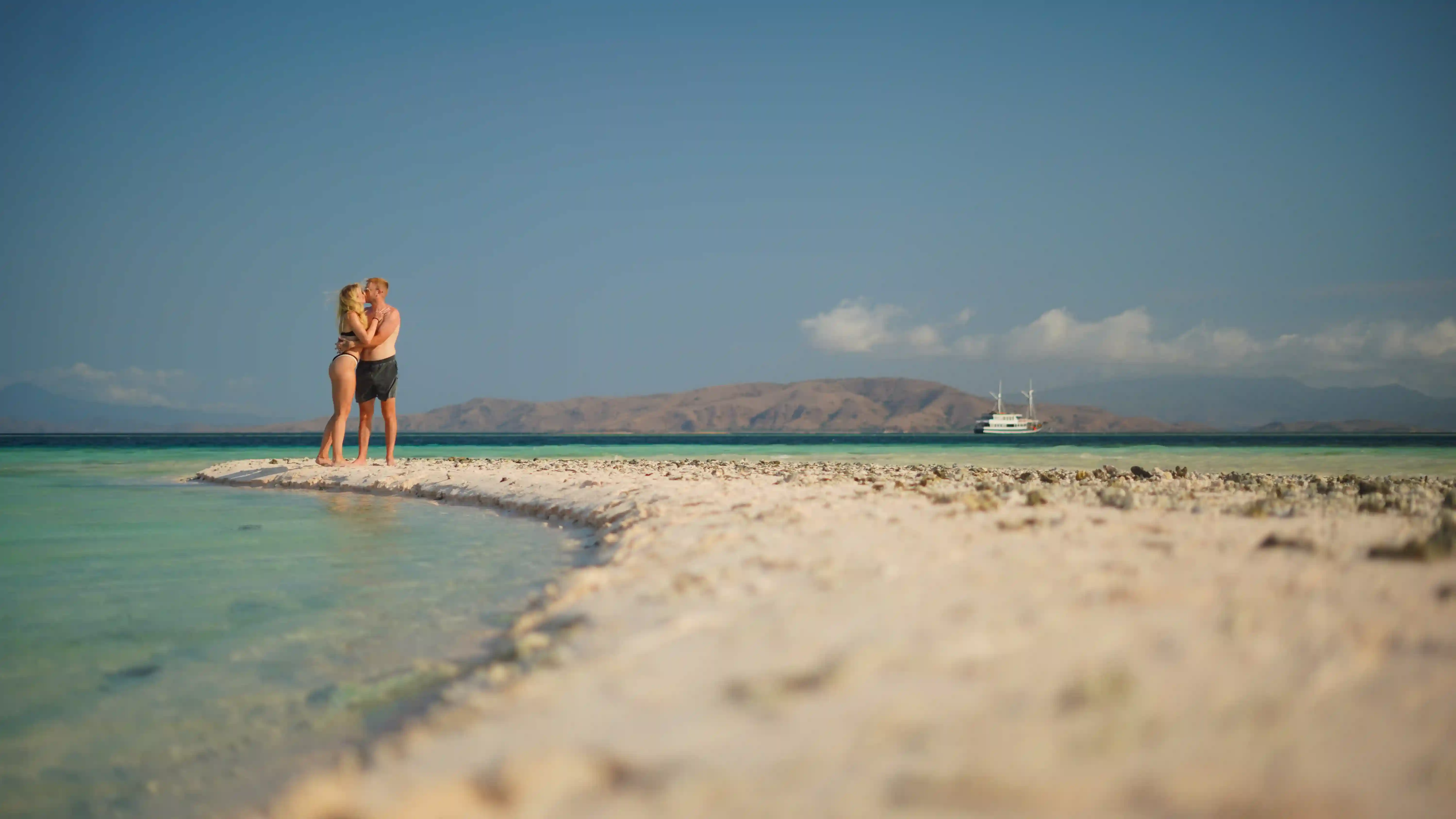
Steel expedition vessels built for range cover remote southern Komodo or Sumba crossings a phinisi schedule will not reach.
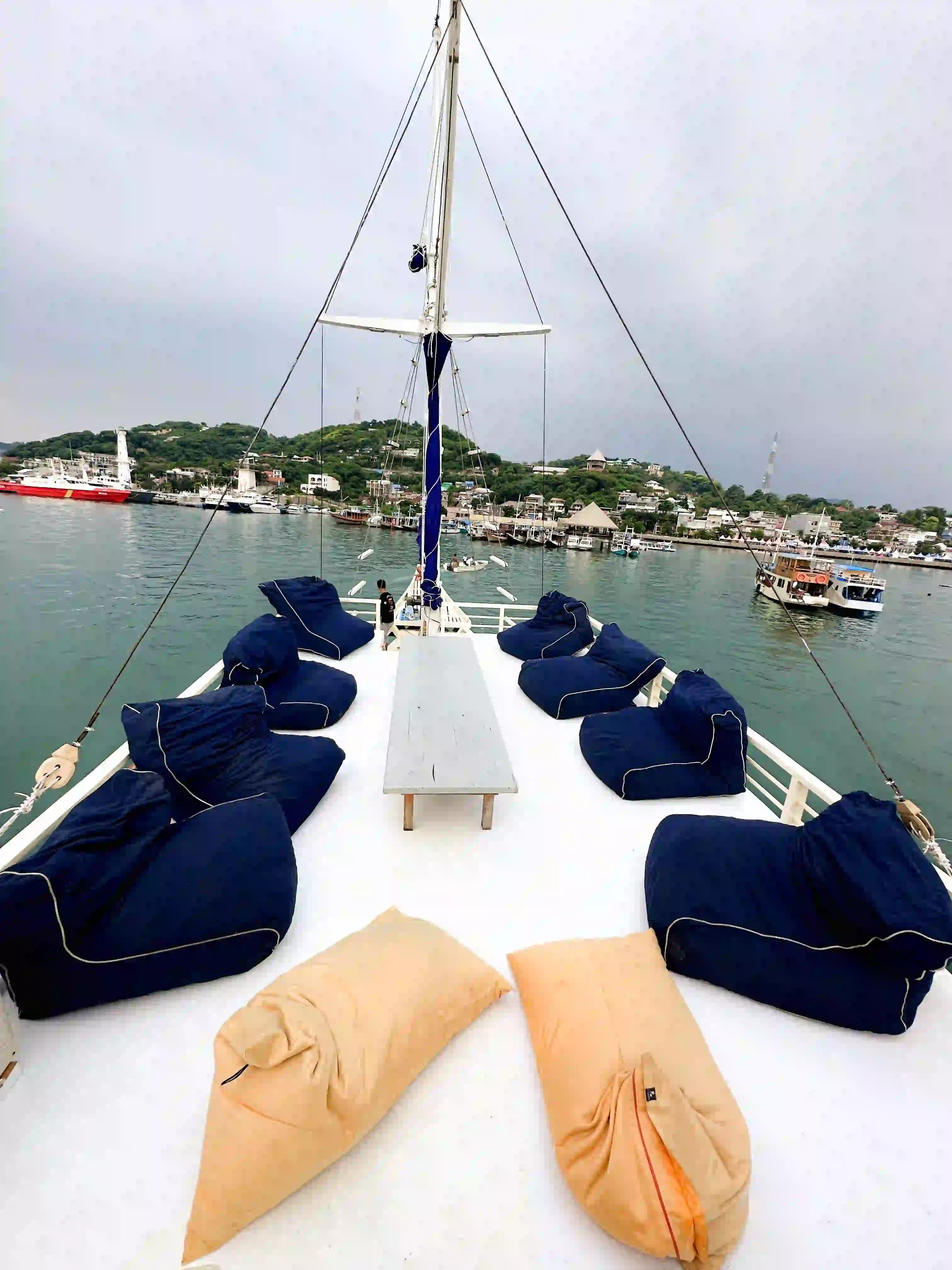
The phinisi class is the only one in the fleet that carries these numbers at a sensible cost per head.
Generally yes. Published phinisi charters start at USD 1,800 per night and most family-sized boats sit between USD 4,200 and USD 8,900, while expedition-grade motor vessels in the same fleet are quoted at USD 26,000 to USD 27,000 plus VAT.
A heavy timber phinisi rolls more slowly and deeply; a motor yacht moves more quickly unless it has stabilisers. Most guests prone to seasickness report the slower motion of the phinisi is easier to tolerate.
Yes, and itineraries are built around it. Long legs such as Kalong to Padar are run overnight while guests sleep, which is why a 3D2N still reaches Padar at sunrise despite the modest cruising speed.
The rigs are working rigs, but they are used selectively. Sails go up on open crossings with usable wind; timed arrivals and narrow passages are run under engine. Expect assisted sailing rather than a pure sailing week.
Cabin air conditioning is standard across the charter fleet, usually running on the generator. Saloons vary — some are fully conditioned, others are open-sided by design. Confirm per vessel before booking.
That depends on maintenance rather than material. A phinisi slipped and caulked on schedule holds its charter position for decades; a neglected hull of any material loses it quickly.
Send us your group size and dates — we'll price the same week on a phinisi and a motor vessel so you can compare like for like.
Chat on WhatsApp